Cuomo says New York supports sports returning, without fans

SackExchange

Jet Fanatic
The Mod Squad
Jet Fanatics
Jets Global
Actually, the stat I saw is that 66% of infections happened at home. So that policy may have actually worsened matters. Plus, the incubation period is around 2 weeks. Openings started happening already within that period and yet, the decline in new cases is still happening. I think there is good evidence already that the virus is petering out.

Incubation is about two weeks at the longest, that is true. I've seen 5-14 days. At that point, symptoms may start.

I very much hope you are correct. Losing 100K people to this is more than enough.
 

Old#15

Old Wise Tale
Jet Fanatics
To Sack's point, the one set of data I'd like to see is the actual number of cases and then we'd know just how deadly the C-19 virus is. I recall early on there were some very alarming mortality rates, however there was also much dispute as to the validity of the denominator (# of cases). Many claimed that it was vastly understated thus inflating the mortality rate. I believe the data is probably better now but still many of the cases have not been recorded due to untested asymptomatic individuals and infected individuals who have not been tested but recovered.
 

Jet Fan RI

Pro Bowl 1st Team
Jet Fanatics
To Sack's point, the one set of data I'd like to see is the actual number of cases and then we'd know just how deadly the C-19 virus is. I recall early on there were some very alarming mortality rates, however there was also much dispute as to the validity of the denominator (# of cases). Many claimed that it was vastly understated thus inflating the mortality rate. I believe the data is probably better now but still many of the cases have not been recorded due to untested asymptomatic individuals and infected individuals who have not been tested but recovered.

It is also important to note that the downward trend in cases is happening despite the hugely increased testing that is being done. It would be interesting to see a graph of the percentage of tested cases that are positive over time. A graph like that should show an even more dramatic drop from the peak than the graph of the raw number of new cases, which is still trending down despite the increased testing. This all bodes well for the possibility of a full NFL season, perhaps even with fans in the seats.
 

Oraelo

Franchise Tagged
Jet Fanatics
The good news is that evidence of the virus petering out is building day by day. States are opening up all over the country, yet the infection rate and death rate are declining overall. My confidence is building that the virus will just disappear. And yes, lots of folks are going too far and too fast (think of the beach scenes and nightclub scenes that have been shown in the media), all while the infection rate and death rate are both declining. I'm fairly optimistic.
Things are petering out BECAUSE of the stay at home orders. It took time for the numbers to drop, just as it will take time for the numbers to climb after the re-open.
 

Jet Fan RI

Pro Bowl 1st Team
Jet Fanatics
Things are petering out BECAUSE of the stay at home orders. It took time for the numbers to drop, just as it will take time for the numbers to climb after the re-open.

The fact that 66% of the new cases come from people at home argues against that idea. Also ,I just saw a graph that shows the infectiousness of the virus is down in almost every state where the lockdown has ended.
 

Oraelo

Franchise Tagged
Jet Fanatics
The fact that 66% of the new cases come from people at home argues against that idea. Also ,I just saw a graph that shows the infectiousness of the virus is down in almost every state where the lockdown has ended.
Where did you get this 66% thing? Do you think that the virus climbed in their window and attacked while they were asleep? Doesn’t work that way.
the virus is down in the few states that JUST opened. Give it time. In mid March when this thing started there were not as many cases as there were in mid April. Person to person spread takes time to increase as well as decrease.

edit: listen man, I hope and pray that you are right and I am wrong. I am not reading as much as you obviously are, I am going but what I am seeing daily, and my eyes are telling me this is far from over.
 

Jet Fan RI

Pro Bowl 1st Team
Jet Fanatics
Where did you get this 66% thing? Do you think that the virus climbed in their window and attacked while they were asleep? Doesn’t work that way.
the virus is down in the few states that JUST opened. Give it time. In mid March when this thing started there were not as many cases as there were in mid April. Person to person spread takes time to increase as well as decrease.

edit: listen man, I hope and pray that you are right and I am wrong. I am not reading as much as you obviously are, I am going but what I am seeing daily, and my eyes are telling me this is far from over.

The 66% thing was mentioned by Cuomo at one of his press conferences. Just do a web search on "66% new covid cases home." It's all over the internet.

If you want an explanation, I suspect the corona is brought into the home by visitors, home deliveries, and people shopping for food, etc. The problem is worsened by staying in a confined space. Getting outside is good for avoiding the virus, at least if you follow the guidelines.

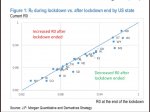
There has already been enough time for a trend to develop. States where the lockdown has ended have lower infection rates than when they were locked down, comparing each state to itself before and after the lockdown.
 

SackExchange

Jet Fanatic
The Mod Squad
Jet Fanatics
Jets Global
The 66% thing was mentioned by Cuomo at one of his press conferences. Just do a web search on "66% new covid cases home." It's all over the internet.

If you want an explanation, I suspect the corona is brought into the home by visitors, home deliveries, and people shopping for food, etc. The problem is worsened by staying in a confined space. Getting outside is good for avoiding the virus, at least if you follow the guidelines.

There has already been enough time for a trend to develop. States where the lockdown has ended have lower infection rates than when they were locked down, comparing each state to itself before and after the lockdown.

This raises another good point about how the virus is entering homes. Be careful with all deliveries, including mail. Let all packages and deliveries quarantine for a good three days. We've been doing the same here. That may be part of what is going into homes.
 

cheaterhater

I've Lost My Fucking Mind
Superior Ass
Jets Global
see if this scares anyone

Today’s safety story comes from the New York Times.

Daily Safety Story 1707

Ravi Sharma was doubled over on his bed when his father found him. He’d had a bad cough for a week and had self-quarantined in his bedroom. As an emergency medical technician, he knew he was probably infected with the coronavirus.

Now, Mr. Sharma, 27, could not move the right side of his body, and could only grunt in his father’s direction. His sister, Bina Yamin, on the phone from her home in Fort Wayne, Ind., could hear the sounds.

“Call 911,” she told her father. “I think Ravi’s having a stroke.” She was right.

Over the next few hours, doctors at a Queens hospital worked frantically to break up a blood clot blocking an artery to Mr. Sharma’s brain. But the doctors were puzzled.

Mr. Sharma was far too young for a stroke. He worked out every day and didn’t have diabetes, high blood pressure or the kinds of medical conditions that can set the stage for strokes in young adults, which are rare.

Neurologists in New York City, Detroit, New Jersey and other parts of the country have reported a flurry of such cases. Many are now convinced that unexplained strokes represent yet another insidious manifestation of Covid-19, the illness caused by the new coronavirus.

The cases add to evidence that the coronavirus attacks not just the lungs, but also the kidneys, brain, heart and liver. In rare cases, it seems to trigger a life-threatening inflammatory syndrome in children.

“We’re seeing a startling number of young people who had a minor cough, or no recollection of viral symptoms at all, and they’re self-isolating at home like they’re supposed to — and they have a sudden stroke,” said Dr. Adam Dmytriw, a University of Toronto radiologist who is a co-author of a paper describing patients who suffered strokes related to Covid-19. The paper has not yet been peer reviewed.

Though many of those patients had diabetes and hypertension, none had heart risks known to increase the odds of a stroke. Many were under age 65. For some, stroke was the first symptom of coronavirus infection, and they postponed going to the emergency room, fearing exposure.

Of 10 patients described in Dr. Dmytriw’s paper, two died because the coronavirus attacked their lungs, and two men — a 46-year-old and a 55-year-old — were killed by strokes.

Doctors at Mount Sinai Health System in New York have also seen an unusual number of young stroke patients, saying they treated five such patients with Covid-19 during a recent two-week period. The medical center typically sees only one stroke patient under the age of 50 every three weeks, Dr. Johanna Fifi, a neurologist, and her colleagues noted in a letter in The New England Journal of Medicine.

Four of the five patients were relatively healthy; two patients in their 30s had no known risk factors for stroke. “We came to the conclusion it had to be related to Covid-19,” Dr. Fifi said in an interview.

Though strokes seem to affect a very small number of Covid-19 patients, they appear to be related to a broader phenomenon that has emerged in critically ill patients: excessive blood clotting.

Patients with severe Covid-19 may develop clots in the legs and lungs that can be life-threatening, doctors said. Their blood can be so thick and viscous that it blocks intravenous lines and catheters. Tiny clots in other organs, like the kidneys and liver, have been found in autopsies of coronavirus patients.

Dr. Michael Yaffe, an intensive care physician at Beth Israel Deaconess Medical Center in Boston, called clotting a “hallmark” of the disease, although “not in everyone.”

German scientists reported last week that autopsies of 12 Covid-19 patients turned up a type of blood clot called deep vein thrombosis in seven of them. The cause of death in four patients was another type of blood clot in the lungs, called a pulmonary embolism.

Clotting is a risk in all critically ill patients if they are immobile for long periods. But patients with the coronavirus have elevated levels of clotting proteins in the blood, and the condition seems to be less responsive to blood-thinning drugs, said Dr. Adam Cuker, an associate professor of medicine at the University of Pennsylvania.

Some evidence suggests that the coronavirus may directly infect the endothelial cells that line the inside of blood vessels, causing injury and swelling that draws proteins that promote clotting, Dr. Cuker said.

People who have been exposed to the coronavirus, or are managing the infection at home, should call their doctors if they notice chest pain and shortness of breath, which may signal a blood clot in the lung, or leg pain, swelling, redness and discoloration that may indicate a clot.

Until he arrived at Jamaica Hospital on April 1, Mr. Sharma had never been tested for infection with the coronavirus. But he knew he was at risk. He had spent weeks making back-to-back ambulance runs, ferrying sick, elderly patients from nursing homes to hospitals in Brooklyn and Queens in February and March.

By mid-March, Mr. Sharma had developed a dry cough. He went to an urgent care clinic, where he was told that it was out of tests, but that he should stay home because he was probably infected.

At the hospital, emergency room doctors took aggressive steps to restore the blood supply to the left side of his brain. They also diagnosed acute respiratory distress syndrome, finding that Mr. Sharma’s infected lungs were filling with fluid and his blood oxygen levels were low. A test revealed infection with the coronavirus, and he was placed on a ventilator.

The doctors were kind but honest with the family, Ms. Yamin said: “They told us that it was 50-50. They didn’t know if he would live or die.”

Over the next few days, while Mr. Sharma remained sedated, Ms. Yamin spoke frequently with the doctors and nurses at the hospital, taking meticulous notes that she shared with relatives and with The New York Times.

Mr. Sharma’s body was flooded with blood thinners to prevent additional clots from forming. His fever spiked as high as 104 degrees Fahrenheit some days, raising his heart rate and further incapacitating his lungs.

Then, on April 8, Mr. Sharma started having seizures. He was sedated more deeply and put on additional medications. Doctors cranked up the ventilator.

By mid-April he had been intubated for two weeks, a period considered a critical make-or-break point for Covid-19 patients, and Ms. Yamin was concerned. No one knew the toll of the stroke itself, or whether Mr. Sharma would be able to walk or talk when he woke up.

“I began to lose faith,” Ms. Yamin recalled in an interview.

Then, on April 15, there was some movement on the left side of Ravi’s body, the side not affected by the stroke. His fever ebbed. The staff lowered the ventilator setting, and he tolerated it.

“Looks like he’s slowly beating this,” Ms. Yamin wrote in a note to the family. “We just need to be patient.”

By April 18, Ravi was breathing more on his own. His fever had disappeared, and his blood pressure and heart rate had stabilized. The next day, he woke up, was taken off the ventilator and started breathing on his own.

He still could not speak and didn’t know what had happened to him, but a nurse held up his phone so the family could see him on FaceTime. “We couldn’t stop crying,” Ms. Yamin said. “We just said: ‘Oh my gosh, Ravi, we love you. These are happy tears.’”

Mr. Sharma whispered into the phone for the first time the next day, his throat still sore and hoarse from the ventilator tube.

Progress continued in baby steps. He ate some applesauce one day, a whole container the next. He started walking using a walker for support.

After a few weeks of inpatient physical therapy at Nassau University Medical Center, he graduated from a walker to a cane. He walked up stairs, sat in a chair and practiced getting up from the bed on his own.

A full recovery from a stroke can take months or even years, and Mr. Sharma is also recovering from the lingering effects of Covid-19, which has left him fatigued, and 50 pounds lighter than before his illness, he said in a video interview with The Times.

But he has made great strides in a short time, and those closest to him say he is still the old Ravi: a social butterfly.

Mr. Sharma boasted that he is everyone’s “favorite patient” at the rehab facility and that he is recovering quickly because staff members have been sneaking him chocolate milk and sweets.

“I got the doctors to order me ice cream as part of my diet,” he said.

He wants to go home, see his family in person, continue to build strength and start building a future with his girlfriend, Leana Soman. They both cried when they were able to video chat for the first time.

“He couldn’t speak, his throat was so bad, so I was lip reading,” Ms. Soman recalled. “He said, ‘I love you,’ and I said, ‘I got that — I love you too.’”

Too many people are still cavalier about the coronavirus, Mr. Sharma said, and young people think they are immune. The disease “was like being hit by a bus,” Mr. Sharma said.

“I’m 27, and if this could happen to me, it could happen to anyone,” he said. “This is real and it’s scary. I want people to go out there and be cautious.”

High Reliability Organizations pay attention to detail and are preoccupied with failure.

Ellen, Mary and Donna


cheaterhater

I've Lost My Fucking Mind
Superior Ass
Jets Global
This raises another good point about how the virus is entering homes. Be careful with all deliveries, including mail. Let all packages and deliveries quarantine for a good three days. We've been doing the same here. That may be part of what is going into homes.

we were getting deliveries but by the time the shopper would start shopping, they would be texting all the things that the store was out of. the delivery would come, it would get left outside, we would wipe each and everything down with lysol wipes before it came in the house. A couple weeks ago, I figured it was no worse if I just put on a mask and brought the hand sanitizer in the car, and shopped myself. used the sanitizer everytime I got in the car. wiped down the keys, steering wheel and then went home and again wiped everything down, many times dumping things out on the floor that had an inner package and then throwing the out package away outside and then washing like crazy afterward.

this is all nuts, but we need food and I don't want to catch this crap. Then you see the epidimiologist on the Today Show, 42 years old , best shape of his life, wearing a mask and gloves everywhere, then has to take a flight and the flight was packed. He said he wanted and should have gotten off but his luggage was already loaded and he opted to stay, still wearing gloves and mask. from the plane he went straight home and ended up with the virus saying that the only place he could have gotten it was on the plane and through his eyes. He ended up in the hospital on oxygen after trying to quarantine at home but he got to the point where he had to call 911. Scary shit
 

TebowCan'tThrow

Supersize!
The Mod Squad
Jet Fanatics
Jets Global
see if this scares anyone

Today’s safety story comes from the New York Times.

Daily Safety Story 1707

Ravi Sharma was doubled over on his bed when his father found him. He’d had a bad cough for a week and had self-quarantined in his bedroom. As an emergency medical technician, he knew he was probably infected with the coronavirus.

Now, Mr. Sharma, 27, could not move the right side of his body, and could only grunt in his father’s direction. His sister, Bina Yamin, on the phone from her home in Fort Wayne, Ind., could hear the sounds.

“Call 911,” she told her father. “I think Ravi’s having a stroke.” She was right.

Over the next few hours, doctors at a Queens hospital worked frantically to break up a blood clot blocking an artery to Mr. Sharma’s brain. But the doctors were puzzled.

Mr. Sharma was far too young for a stroke. He worked out every day and didn’t have diabetes, high blood pressure or the kinds of medical conditions that can set the stage for strokes in young adults, which are rare.

Neurologists in New York City, Detroit, New Jersey and other parts of the country have reported a flurry of such cases. Many are now convinced that unexplained strokes represent yet another insidious manifestation of Covid-19, the illness caused by the new coronavirus.

The cases add to evidence that the coronavirus attacks not just the lungs, but also the kidneys, brain, heart and liver. In rare cases, it seems to trigger a life-threatening inflammatory syndrome in children.

“We’re seeing a startling number of young people who had a minor cough, or no recollection of viral symptoms at all, and they’re self-isolating at home like they’re supposed to — and they have a sudden stroke,” said Dr. Adam Dmytriw, a University of Toronto radiologist who is a co-author of a paper describing patients who suffered strokes related to Covid-19. The paper has not yet been peer reviewed.

Though many of those patients had diabetes and hypertension, none had heart risks known to increase the odds of a stroke. Many were under age 65. For some, stroke was the first symptom of coronavirus infection, and they postponed going to the emergency room, fearing exposure.

Of 10 patients described in Dr. Dmytriw’s paper, two died because the coronavirus attacked their lungs, and two men — a 46-year-old and a 55-year-old — were killed by strokes.

Doctors at Mount Sinai Health System in New York have also seen an unusual number of young stroke patients, saying they treated five such patients with Covid-19 during a recent two-week period. The medical center typically sees only one stroke patient under the age of 50 every three weeks, Dr. Johanna Fifi, a neurologist, and her colleagues noted in a letter in The New England Journal of Medicine.

Four of the five patients were relatively healthy; two patients in their 30s had no known risk factors for stroke. “We came to the conclusion it had to be related to Covid-19,” Dr. Fifi said in an interview.

Though strokes seem to affect a very small number of Covid-19 patients, they appear to be related to a broader phenomenon that has emerged in critically ill patients: excessive blood clotting.

Patients with severe Covid-19 may develop clots in the legs and lungs that can be life-threatening, doctors said. Their blood can be so thick and viscous that it blocks intravenous lines and catheters. Tiny clots in other organs, like the kidneys and liver, have been found in autopsies of coronavirus patients.

Dr. Michael Yaffe, an intensive care physician at Beth Israel Deaconess Medical Center in Boston, called clotting a “hallmark” of the disease, although “not in everyone.”

German scientists reported last week that autopsies of 12 Covid-19 patients turned up a type of blood clot called deep vein thrombosis in seven of them. The cause of death in four patients was another type of blood clot in the lungs, called a pulmonary embolism.

Clotting is a risk in all critically ill patients if they are immobile for long periods. But patients with the coronavirus have elevated levels of clotting proteins in the blood, and the condition seems to be less responsive to blood-thinning drugs, said Dr. Adam Cuker, an associate professor of medicine at the University of Pennsylvania.

Some evidence suggests that the coronavirus may directly infect the endothelial cells that line the inside of blood vessels, causing injury and swelling that draws proteins that promote clotting, Dr. Cuker said.

People who have been exposed to the coronavirus, or are managing the infection at home, should call their doctors if they notice chest pain and shortness of breath, which may signal a blood clot in the lung, or leg pain, swelling, redness and discoloration that may indicate a clot.

Until he arrived at Jamaica Hospital on April 1, Mr. Sharma had never been tested for infection with the coronavirus. But he knew he was at risk. He had spent weeks making back-to-back ambulance runs, ferrying sick, elderly patients from nursing homes to hospitals in Brooklyn and Queens in February and March.

By mid-March, Mr. Sharma had developed a dry cough. He went to an urgent care clinic, where he was told that it was out of tests, but that he should stay home because he was probably infected.

At the hospital, emergency room doctors took aggressive steps to restore the blood supply to the left side of his brain. They also diagnosed acute respiratory distress syndrome, finding that Mr. Sharma’s infected lungs were filling with fluid and his blood oxygen levels were low. A test revealed infection with the coronavirus, and he was placed on a ventilator.

The doctors were kind but honest with the family, Ms. Yamin said: “They told us that it was 50-50. They didn’t know if he would live or die.”

Over the next few days, while Mr. Sharma remained sedated, Ms. Yamin spoke frequently with the doctors and nurses at the hospital, taking meticulous notes that she shared with relatives and with The New York Times.

Mr. Sharma’s body was flooded with blood thinners to prevent additional clots from forming. His fever spiked as high as 104 degrees Fahrenheit some days, raising his heart rate and further incapacitating his lungs.

Then, on April 8, Mr. Sharma started having seizures. He was sedated more deeply and put on additional medications. Doctors cranked up the ventilator.

By mid-April he had been intubated for two weeks, a period considered a critical make-or-break point for Covid-19 patients, and Ms. Yamin was concerned. No one knew the toll of the stroke itself, or whether Mr. Sharma would be able to walk or talk when he woke up.

“I began to lose faith,” Ms. Yamin recalled in an interview.

Then, on April 15, there was some movement on the left side of Ravi’s body, the side not affected by the stroke. His fever ebbed. The staff lowered the ventilator setting, and he tolerated it.

“Looks like he’s slowly beating this,” Ms. Yamin wrote in a note to the family. “We just need to be patient.”

By April 18, Ravi was breathing more on his own. His fever had disappeared, and his blood pressure and heart rate had stabilized. The next day, he woke up, was taken off the ventilator and started breathing on his own.

He still could not speak and didn’t know what had happened to him, but a nurse held up his phone so the family could see him on FaceTime. “We couldn’t stop crying,” Ms. Yamin said. “We just said: ‘Oh my gosh, Ravi, we love you. These are happy tears.’”

Mr. Sharma whispered into the phone for the first time the next day, his throat still sore and hoarse from the ventilator tube.

Progress continued in baby steps. He ate some applesauce one day, a whole container the next. He started walking using a walker for support.

After a few weeks of inpatient physical therapy at Nassau University Medical Center, he graduated from a walker to a cane. He walked up stairs, sat in a chair and practiced getting up from the bed on his own.

A full recovery from a stroke can take months or even years, and Mr. Sharma is also recovering from the lingering effects of Covid-19, which has left him fatigued, and 50 pounds lighter than before his illness, he said in a video interview with The Times.

But he has made great strides in a short time, and those closest to him say he is still the old Ravi: a social butterfly.

Mr. Sharma boasted that he is everyone’s “favorite patient” at the rehab facility and that he is recovering quickly because staff members have been sneaking him chocolate milk and sweets.

“I got the doctors to order me ice cream as part of my diet,” he said.

He wants to go home, see his family in person, continue to build strength and start building a future with his girlfriend, Leana Soman. They both cried when they were able to video chat for the first time.

“He couldn’t speak, his throat was so bad, so I was lip reading,” Ms. Soman recalled. “He said, ‘I love you,’ and I said, ‘I got that — I love you too.’”

Too many people are still cavalier about the coronavirus, Mr. Sharma said, and young people think they are immune. The disease “was like being hit by a bus,” Mr. Sharma said.

“I’m 27, and if this could happen to me, it could happen to anyone,” he said. “This is real and it’s scary. I want people to go out there and be cautious.”

High Reliability Organizations pay attention to detail and are preoccupied with failure.

Ellen, Mary and Donna


Scary story, but it doesn't change how I feel about all of this. Now if everyone that got the virus had this or death happen then I would think differently. Not making light of the situation, but I have a higher chance of this happening...

F760B3C4-11F8-42E5-A5BB-8C17BA61A4F2.jpeg
 

Jet Fan RI

Pro Bowl 1st Team
Jet Fanatics
Just to be clear, I am not saying covid isn't a horrid disease. What I am saying is that there are good reasons to be optimistic.
 

cheaterhater

I've Lost My Fucking Mind
Superior Ass
Jets Global
Scary story, but it doesn't change how I feel about all of this. Now if everyone that got the virus had this or death happen then I would think differently. Not making light of the situation, but I have a higher chance of this happening...

View attachment 1881
I looked for per state death numbers on that and found nothing. although Wile E Coyote always did somehow live through it
 

cheaterhater

I've Lost My Fucking Mind
Superior Ass
Jets Global
Scary story, but it doesn't change how I feel about all of this. Now if everyone that got the virus had this or death happen then I would think differently. Not making light of the situation, but I have a higher chance of this happening...

View attachment 1881
You could just as well have said that the odds of the Jets winning the Superbowl in our lifetime are better than...
 

Jet Fan RI

Pro Bowl 1st Team
Jet Fanatics
I looked for per state death numbers on that and found nothing. although Wile E Coyote always did somehow live through it

I have attached the graph that shows what I was talking about. The straight line represents equal rates. So points above the line have a higher rate, below the line lower. The r0 mentioned in the graph is a measure of the infectiousness as used by experts who study pandemics.


r0 covid.jpg
 

Oraelo

Franchise Tagged
Jet Fanatics
see if this scares anyone

Today’s safety story comes from the New York Times.

Daily Safety Story 1707

Ravi Sharma was doubled over on his bed when his father found him. He’d had a bad cough for a week and had self-quarantined in his bedroom. As an emergency medical technician, he knew he was probably infected with the coronavirus.

Now, Mr. Sharma, 27, could not move the right side of his body, and could only grunt in his father’s direction. His sister, Bina Yamin, on the phone from her home in Fort Wayne, Ind., could hear the sounds.

“Call 911,” she told her father. “I think Ravi’s having a stroke.” She was right.

Over the next few hours, doctors at a Queens hospital worked frantically to break up a blood clot blocking an artery to Mr. Sharma’s brain. But the doctors were puzzled.

Mr. Sharma was far too young for a stroke. He worked out every day and didn’t have diabetes, high blood pressure or the kinds of medical conditions that can set the stage for strokes in young adults, which are rare.

Neurologists in New York City, Detroit, New Jersey and other parts of the country have reported a flurry of such cases. Many are now convinced that unexplained strokes represent yet another insidious manifestation of Covid-19, the illness caused by the new coronavirus.

The cases add to evidence that the coronavirus attacks not just the lungs, but also the kidneys, brain, heart and liver. In rare cases, it seems to trigger a life-threatening inflammatory syndrome in children.

“We’re seeing a startling number of young people who had a minor cough, or no recollection of viral symptoms at all, and they’re self-isolating at home like they’re supposed to — and they have a sudden stroke,” said Dr. Adam Dmytriw, a University of Toronto radiologist who is a co-author of a paper describing patients who suffered strokes related to Covid-19. The paper has not yet been peer reviewed.

Though many of those patients had diabetes and hypertension, none had heart risks known to increase the odds of a stroke. Many were under age 65. For some, stroke was the first symptom of coronavirus infection, and they postponed going to the emergency room, fearing exposure.

Of 10 patients described in Dr. Dmytriw’s paper, two died because the coronavirus attacked their lungs, and two men — a 46-year-old and a 55-year-old — were killed by strokes.

Doctors at Mount Sinai Health System in New York have also seen an unusual number of young stroke patients, saying they treated five such patients with Covid-19 during a recent two-week period. The medical center typically sees only one stroke patient under the age of 50 every three weeks, Dr. Johanna Fifi, a neurologist, and her colleagues noted in a letter in The New England Journal of Medicine.

Four of the five patients were relatively healthy; two patients in their 30s had no known risk factors for stroke. “We came to the conclusion it had to be related to Covid-19,” Dr. Fifi said in an interview.

Though strokes seem to affect a very small number of Covid-19 patients, they appear to be related to a broader phenomenon that has emerged in critically ill patients: excessive blood clotting.

Patients with severe Covid-19 may develop clots in the legs and lungs that can be life-threatening, doctors said. Their blood can be so thick and viscous that it blocks intravenous lines and catheters. Tiny clots in other organs, like the kidneys and liver, have been found in autopsies of coronavirus patients.

Dr. Michael Yaffe, an intensive care physician at Beth Israel Deaconess Medical Center in Boston, called clotting a “hallmark” of the disease, although “not in everyone.”

German scientists reported last week that autopsies of 12 Covid-19 patients turned up a type of blood clot called deep vein thrombosis in seven of them. The cause of death in four patients was another type of blood clot in the lungs, called a pulmonary embolism.

Clotting is a risk in all critically ill patients if they are immobile for long periods. But patients with the coronavirus have elevated levels of clotting proteins in the blood, and the condition seems to be less responsive to blood-thinning drugs, said Dr. Adam Cuker, an associate professor of medicine at the University of Pennsylvania.

Some evidence suggests that the coronavirus may directly infect the endothelial cells that line the inside of blood vessels, causing injury and swelling that draws proteins that promote clotting, Dr. Cuker said.

People who have been exposed to the coronavirus, or are managing the infection at home, should call their doctors if they notice chest pain and shortness of breath, which may signal a blood clot in the lung, or leg pain, swelling, redness and discoloration that may indicate a clot.

Until he arrived at Jamaica Hospital on April 1, Mr. Sharma had never been tested for infection with the coronavirus. But he knew he was at risk. He had spent weeks making back-to-back ambulance runs, ferrying sick, elderly patients from nursing homes to hospitals in Brooklyn and Queens in February and March.

By mid-March, Mr. Sharma had developed a dry cough. He went to an urgent care clinic, where he was told that it was out of tests, but that he should stay home because he was probably infected.

At the hospital, emergency room doctors took aggressive steps to restore the blood supply to the left side of his brain. They also diagnosed acute respiratory distress syndrome, finding that Mr. Sharma’s infected lungs were filling with fluid and his blood oxygen levels were low. A test revealed infection with the coronavirus, and he was placed on a ventilator.

The doctors were kind but honest with the family, Ms. Yamin said: “They told us that it was 50-50. They didn’t know if he would live or die.”

Over the next few days, while Mr. Sharma remained sedated, Ms. Yamin spoke frequently with the doctors and nurses at the hospital, taking meticulous notes that she shared with relatives and with The New York Times.

Mr. Sharma’s body was flooded with blood thinners to prevent additional clots from forming. His fever spiked as high as 104 degrees Fahrenheit some days, raising his heart rate and further incapacitating his lungs.

Then, on April 8, Mr. Sharma started having seizures. He was sedated more deeply and put on additional medications. Doctors cranked up the ventilator.

By mid-April he had been intubated for two weeks, a period considered a critical make-or-break point for Covid-19 patients, and Ms. Yamin was concerned. No one knew the toll of the stroke itself, or whether Mr. Sharma would be able to walk or talk when he woke up.

“I began to lose faith,” Ms. Yamin recalled in an interview.

Then, on April 15, there was some movement on the left side of Ravi’s body, the side not affected by the stroke. His fever ebbed. The staff lowered the ventilator setting, and he tolerated it.

“Looks like he’s slowly beating this,” Ms. Yamin wrote in a note to the family. “We just need to be patient.”

By April 18, Ravi was breathing more on his own. His fever had disappeared, and his blood pressure and heart rate had stabilized. The next day, he woke up, was taken off the ventilator and started breathing on his own.

He still could not speak and didn’t know what had happened to him, but a nurse held up his phone so the family could see him on FaceTime. “We couldn’t stop crying,” Ms. Yamin said. “We just said: ‘Oh my gosh, Ravi, we love you. These are happy tears.’”

Mr. Sharma whispered into the phone for the first time the next day, his throat still sore and hoarse from the ventilator tube.

Progress continued in baby steps. He ate some applesauce one day, a whole container the next. He started walking using a walker for support.

After a few weeks of inpatient physical therapy at Nassau University Medical Center, he graduated from a walker to a cane. He walked up stairs, sat in a chair and practiced getting up from the bed on his own.

A full recovery from a stroke can take months or even years, and Mr. Sharma is also recovering from the lingering effects of Covid-19, which has left him fatigued, and 50 pounds lighter than before his illness, he said in a video interview with The Times.

But he has made great strides in a short time, and those closest to him say he is still the old Ravi: a social butterfly.

Mr. Sharma boasted that he is everyone’s “favorite patient” at the rehab facility and that he is recovering quickly because staff members have been sneaking him chocolate milk and sweets.

“I got the doctors to order me ice cream as part of my diet,” he said.
Ellen, Mary and Donna


Most of the people that we are seeing With corona have an elevated D-dimer (a blood test that Shows the presence of a blood clot some where in the system.) there have been many people that I have seen that are doing reasonably well one minute then crashing hard the next. The belief is that in their hyper coaguabile state that they are throwing a blood clot that is turning into a pulmonary embolism that is killing then.
 

Jet Fan RI

Pro Bowl 1st Team
Jet Fanatics
#1 Commandment of being a Jet Fan. Thou shall not ever, ever be optimistic

Yah, I have never learned that Commandment. Seems every season I am optimistic on Opening Day. What distinguishes one season from the next is how long that lasts...
 

cheaterhater

I've Lost My Fucking Mind
Superior Ass
Jets Global
Most of the people that we are seeing With corona have an elevated D-dimer (a blood test that Shows the presence of a blood clot some where in the system.) there have been many people that I have seen that are doing reasonably well one minute then crashing hard the next. The belief is that in their hyper coaguabile state that they are throwing a blood clot that is turning into a pulmonary embolism that is killing then.
yeah. that's what my wife said. she sent me that article from work
 
Top