

Is it already time to give up?
While we've talked about the ways in which Darnold hasn't gotten much help from the Jets, let's think about this in the big picture. Is it possible that two years of subpar numbers is enough to know that Darnold isn't going to be a long-term solution?
Pro Football Reference tracks nine index statistics for quarterbacks, adjusting stats such as completion percentage, yards per attempt, sack rate and interception rate for each year's league average. Darnold has ranked below average in each of the nine statistics in his first two seasons. Since 1990, there have been only three quarterbacks who got 200 pass attempts in each of their first two seasons and managed to pull that off: Darnold, Ryan Leaf and Geno Smith. Not a great start.
Let's approach it a different way. As you might suspect, Darnold's cumulative statistics over two years also rate as below average across those nine index metrics. If we look at the quarterbacks who have been below average by all nine measures while throwing 600 pass attempts over their first two seasons combined, you get a list that includes Darnold, Smith, Josh Allen, Brandon Weeden, Blake Bortles, Christian Ponder and Derek Carr. More optimistically, it also includes Tannehill, Alex Smith and Troy Aikman.
Pro Football Focus data analyst Kevin Cole's Bayesian study of quarterback play also didn't give a positive outlook about Darnold's chances of improving to the point where he would be a starting-caliber quarterback. Darnold's comps through two years include passers such as Geno Smith, Bortles, Ponder and another former Jets starter in Mark Sanchez. The team is unquestionably hoping for more than that from Darnold, even after two inconsistent seasons.
One factor that might play on Darnold's side is that he came into the league extremely young. He was just 20 when the Jets selected him in April 2018, and he just turned 23 last month. For context, he is six months younger than Joe Burrow, who was the first overall pick in the 2020 draft, two years after Darnold came off the board. All other things being equal, entering the league younger gives Darnold more time to develop at the highest level instead of wasting reps and hits against overmatched competition in college.
By the numbers, the odds are stacked against him after two seasons. Considering his age, the mono and the mediocrity surrounding him, I'm inclined to think Darnold's chances of turning into an above-average starter are a little better than they might seem in a vacuum. But ...
 www.espn.com
While we've talked about the ways in which Darnold hasn't gotten much help from the Jets, let's think about this in the big picture. Is it possible that two years of subpar numbers is enough to know that Darnold isn't going to be a long-term solution?
Pro Football Reference tracks nine index statistics for quarterbacks, adjusting stats such as completion percentage, yards per attempt, sack rate and interception rate for each year's league average. Darnold has ranked below average in each of the nine statistics in his first two seasons. Since 1990, there have been only three quarterbacks who got 200 pass attempts in each of their first two seasons and managed to pull that off: Darnold, Ryan Leaf and Geno Smith. Not a great start.
Let's approach it a different way. As you might suspect, Darnold's cumulative statistics over two years also rate as below average across those nine index metrics. If we look at the quarterbacks who have been below average by all nine measures while throwing 600 pass attempts over their first two seasons combined, you get a list that includes Darnold, Smith, Josh Allen, Brandon Weeden, Blake Bortles, Christian Ponder and Derek Carr. More optimistically, it also includes Tannehill, Alex Smith and Troy Aikman.
Pro Football Focus data analyst Kevin Cole's Bayesian study of quarterback play also didn't give a positive outlook about Darnold's chances of improving to the point where he would be a starting-caliber quarterback. Darnold's comps through two years include passers such as Geno Smith, Bortles, Ponder and another former Jets starter in Mark Sanchez. The team is unquestionably hoping for more than that from Darnold, even after two inconsistent seasons.
One factor that might play on Darnold's side is that he came into the league extremely young. He was just 20 when the Jets selected him in April 2018, and he just turned 23 last month. For context, he is six months younger than Joe Burrow, who was the first overall pick in the 2020 draft, two years after Darnold came off the board. All other things being equal, entering the league younger gives Darnold more time to develop at the highest level instead of wasting reps and hits against overmatched competition in college.
By the numbers, the odds are stacked against him after two seasons. Considering his age, the mono and the mediocrity surrounding him, I'm inclined to think Darnold's chances of turning into an above-average starter are a little better than they might seem in a vacuum. But ...
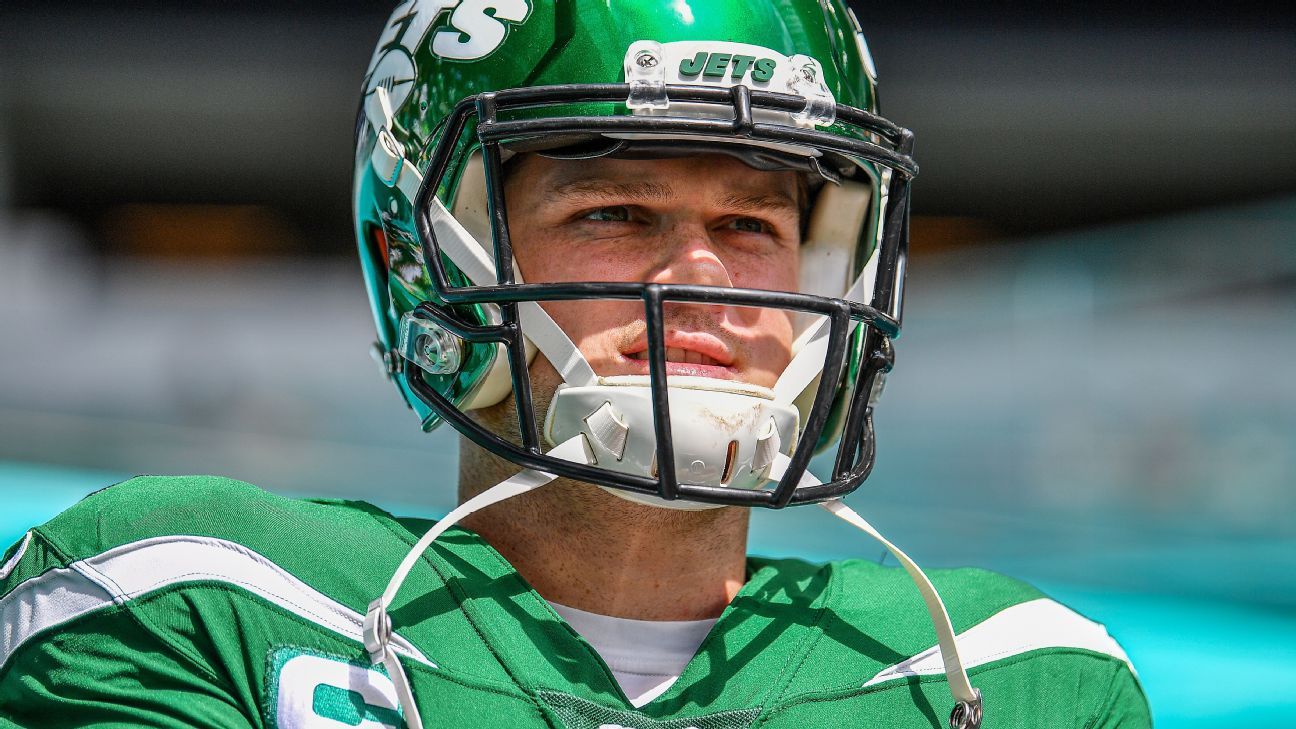
Is this Sam Darnold's last chance? A progress report on the Jets QB and what to expect in 2020
Dig into the numbers, and the odds are stacked against Darnold. But considering his age and skill set, there's reason for optimism.


